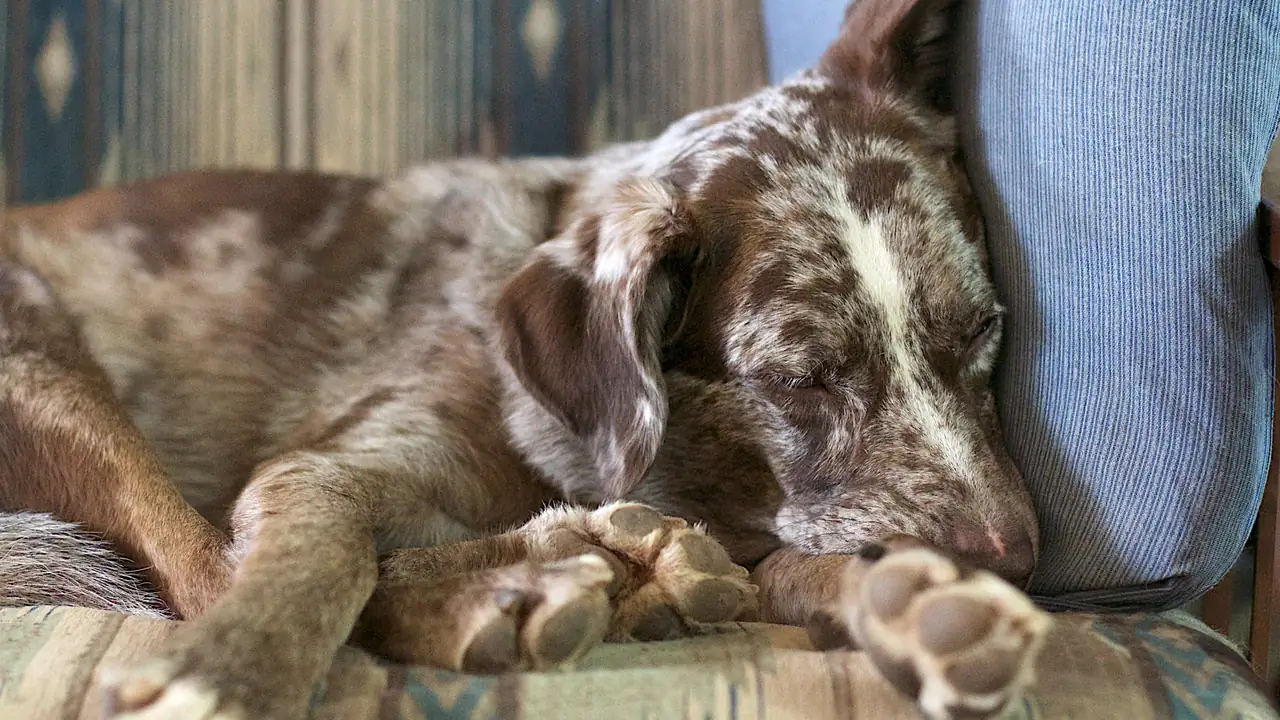
For many people, New Year's Eve means a late night, a countdown and a few fireworks. For a noise-sensitive dog or cat, it can mean hours of sudden booms, flashes of light and a household that feels nothing like normal. The good news is that a little planning goes a long way, and most of it starts weeks before December 31.
This guide covers how to prepare your pet for New Year's Eve noise, whether you are staying home or traveling over the holiday, and how in-home care can help your pet ride out the night somewhere familiar.
Why New Year's Eve is different from other noisy nights
Fireworks are not limited to one holiday, and if your dog struggles with summer celebrations, you may already know the signs. (For warm-weather events, see How to Keep Your Dog Calm During Louisville's Loudest Festival Weekends.) New Year's Eve has a few challenges of its own:
- It happens late. Noise often builds toward midnight, when many pets would normally be settled for the night.
- It is unpredictable. Neighborhood fireworks can start early in the evening and pop up again after midnight, so there is rarely a single moment when it is "over."
- Routines are already off. Holiday travel, visitors and later bedtimes can leave pets a little unsettled before the first firework goes off.
- It is cold and dark. A pet who bolts outside in a panic on a winter night is at real risk, which makes secure doors and gates even more important.
Signs your pet may be sensitive to noise
Some pets sleep through fireworks. Others show stress in ways that are easy to miss. Watch for:
- Pacing, panting or trembling
- Hiding under furniture, in closets or in a bathtub
- Clinging to you or following you from room to room
- Barking, whining or howling
- Trying to dig, chew or escape through doors or windows
- Refusing food or treats they usually love
- In cats, hiding for long periods, flattening low to the ground or avoiding the litter box
If you notice these signs during storms, construction noise or other celebrations, plan for New Year's Eve as well.
If you are home for New Year's Eve
Create a quiet, secure space
Choose a room your pet already likes, ideally an interior room with fewer windows. Add familiar bedding, a favorite toy and water. Close blinds or curtains to soften flashes of light. For a cat, make sure their usual hiding spots and litter box are easy to reach and that no one tries to pull them out of hiding.
Use familiar background sound
A TV, radio or fan running at a comfortable volume can help soften sudden noises. Start it before the fireworks begin so it feels like part of the evening rather than a signal that something is wrong.
Time walks and potty breaks carefully
Take dogs out for a longer walk or play session earlier in the day, while it is still light and quieter. For later potty breaks, use a leash even in a fenced yard, and check that collars and ID tags fit well. A startled dog can slip out of a door or gate in seconds.
Let your pet set the pace
Comfort your pet if they come to you, but do not force interaction or drag them out of a hiding place. This is a core idea behind Fear Free care, which focuses on reducing fear, anxiety and stress by letting pets approach on their own terms. You can learn more in What Is Fear Free Pet Care?
If you are traveling over New Year's
Leaving town over the holiday does not have to mean leaving a sensitive pet to face the noise alone. Staying in a familiar home, with someone following their usual routine, is often the most comfortable option for a pet who is already stressed by noise. Here is how each type of in-home care can fit.
Drop-in visits
Drop-In Pet Visits can include feeding, fresh water, potty breaks, litter box cleaning, playtime and companionship. Visits can also include light and blind rotation and turning on a TV or radio for companionship, which can help set up a calmer evening before the noise starts. You will receive GPS-tracked visits with photos and detailed visit reports. Visit times may fall within service windows, so tell me early which time of day matters most for your pet.
Overnight house sitting
For pets who do better with someone in the house overnight, Overnight House Sitting provides overnight supervision and companionship in your home. Standard check-in and check-out windows are listed on the house sitting page, and custom schedules may be available upon request, subject to availability. Midday drop-ins are booked separately if your pet also needs daytime care.
24-hour care
If your pet has separation anxiety, cannot be left alone for long periods or needs frequent monitoring, 24-Hour Care keeps a dedicated sitter in your home for the entire stay. For a pet who is likely to struggle all evening and into the night, continuous companionship may be the best fit.
Home-style dog boarding
Some dogs are comfortable staying in my home while you travel. Home-style dog boarding offers a cage-free setting with supervised outdoor time and one-on-one attention. If your dog is nervous about fireworks, tell me when you book so I can plan for it. Boarding has vaccination and age requirements, so review them before requesting dates.
Serving Louisville, Oldham County and Southern Indiana
I serve many communities in East Louisville and Oldham County, including St. Matthews, the Highlands, Anchorage and Crestwood; Southern Indiana communities such as New Albany, Jeffersonville and Floyds Knobs; and South and Southwest Louisville areas like PRP, Valley Station and Okolona. Holiday dates can be busy, so contact me to confirm availability and travel for your area.
What to tell your sitter before New Year's Eve
Whatever care you choose, written details help any caregiver keep your pet's night as calm as possible. Include:
- How your pet usually reacts to loud noise, and what seems to help
- Their favorite hiding spots, and whether they should be left alone there
- Which room to use as a quiet space, and whether blinds, lights or a TV should be left on
- Feeding times, so dinner can be finished before the noise usually picks up
- Any medications or instructions your veterinarian has provided, written clearly
- Doors, gates or windows that need extra attention
- Your veterinarian's contact information and an emergency contact
I am Fear Free Certified and Pet First Aid & CPR Trained, and I follow your written instructions and your pet's normal routine. For a fuller preparation list, see the First-Time Pet Sitter Checklist on the blog.
When to talk to your veterinarian
If your pet's fear of fireworks is severe, gets worse each year or leads to injury, destructive escape attempts or days of lingering stress, talk to your veterinarian well before New Year's Eve. Your vet can help you understand what is going on and recommend a plan that fits your pet's health. Do not give your pet any medication or supplement for noise anxiety without your veterinarian's guidance. If your vet does prescribe something, share the written instructions with your sitter so they can be followed as directed.
Plan early for a calmer night
New Year's Eve falls right after a busy holiday travel season, so it helps to plan your pet's care as soon as your plans are set. Holiday dates can fill up, and under the client policies, a 50% deposit holds future dates.
New clients can start by completing a Time To Pet registration. You can also review the services and client policies pages, or ask a question if you are not sure which type of care fits your pet's New Year's Eve.