Older cats are often easy to underestimate. They sleep more, they ask for less, and many of them seem perfectly content to be left alone for a day. But a senior cat's quiet routine can hide real needs, and when you travel this winter, those needs do not take a break.
If your cat is getting older, the right question is not just "Does my cat need a sitter?" It is "How much care does my cat actually need each day, and does a quick visit cover it?" This guide walks through the signs that a senior cat needs more than a brief check-in, and how to plan in-home care that fits.
Why age changes what a visit needs to cover
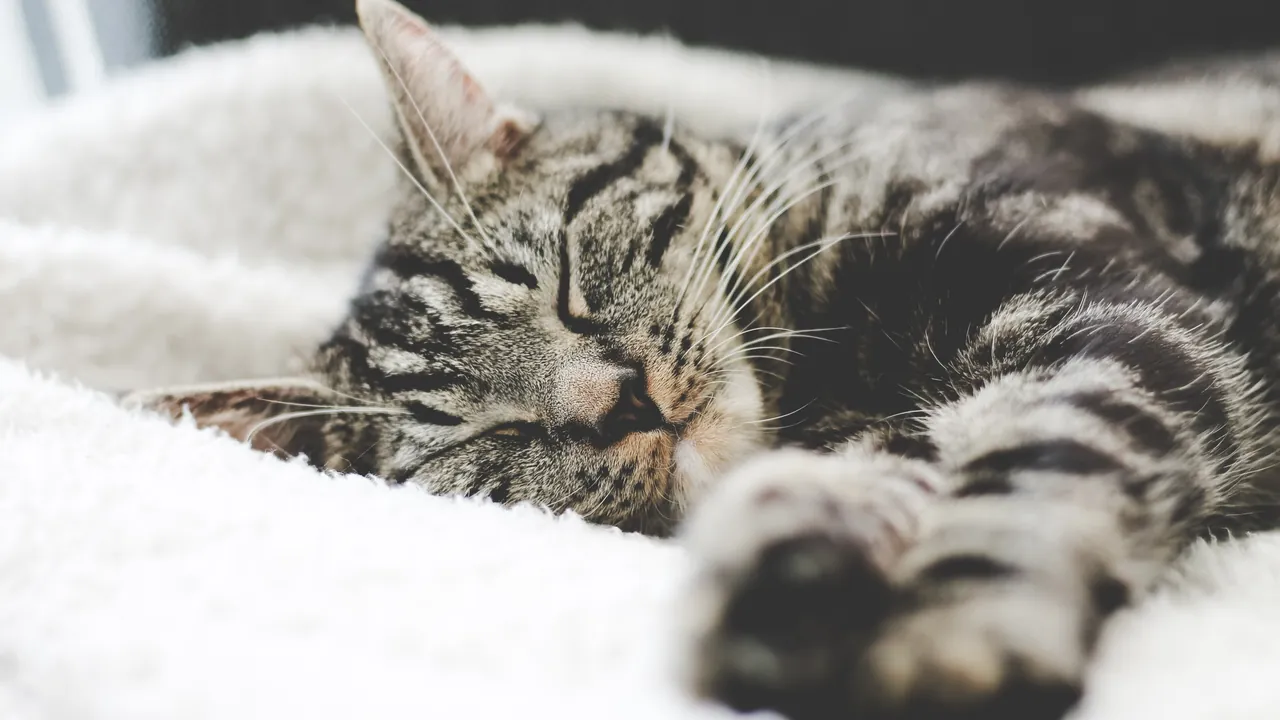
A young, healthy cat may only need fresh food and water, a clean litter box and a little company. An older cat may need the same things, plus time. Time to eat slowly. Time to take medication calmly. Time for someone to notice whether today looks different from yesterday.
Staying home is often the most comfortable option for an older cat. Familiar rooms, sleeping spots and litter box locations help many cats feel secure, and a senior cat may find a car ride or a new environment harder to handle. Drop-In Pet Visits let your cat stay in those familiar surroundings with care built around the routine you already have.
Every cat needs someone checking in daily while you are away, even a cat who seems independent. Myth Busted: Why Cats Need Daily Visits While You're Away explains why extra food and water bowls are not enough.
Signs your senior cat needs more than a quick visit
Not every older cat needs extra care. But if any of the following describe your cat, plan for more than a brief stop:
- A medication schedule. Pills, liquids or other medications given at set times, especially more than once a day.
- Slow or picky eating. A cat who eats small amounts over time, needs food warmed or mixed a certain way, or only eats with company nearby.
- Changes your veterinarian is watching. If your vet has asked you to keep an eye on appetite, drinking, weight or litter box habits, your sitter should be watching too.
- Mobility changes. Trouble with stairs, jumping, or stepping into a high-sided litter box. Older cats may rely on ramps, steps or a low-entry box set up in a particular spot.
- More hiding, or more clinginess. Some older cats withdraw when routines change, while others want more attention than they used to. Either way, a visit should allow time to find your cat and let them settle.
- An ongoing health condition. If your cat is being treated for a chronic condition, ask your veterinarian what a caregiver should look for and when to call.
None of these signs mean your cat cannot stay home. They simply mean the plan should be built around your cat's real day, not a generic visit.
Longer visits or more visits each day
Drop-in visits are booked by length, from short check-ins to longer visits, and you can see the options on the Drop-In Pet Visits page. For a senior cat, two adjustments are worth discussing.
A longer visit
A longer visit can help when your cat eats slowly, needs medication given patiently, or needs time to come out of hiding before anyone can check on them. Rushing an older cat through a routine can make the whole visit harder.
More than one visit a day
If your cat takes medication twice a day, eats several small meals, or simply does better with company in the morning and evening, more than one visit each day may be a better fit. Visit times may fall within service windows, so share which times matter most and why. Specific schedules and availability are confirmed during booking.
What a drop-in visit can include for an older cat
During a drop-in visit, I follow the instructions you leave. For a senior cat, that can include:
- Feeding and fresh water, following your written feeding instructions
- Litter box cleaning, with a note of anything unusual
- Medication administration when needed, following clear written instructions and when your cat can be handled safely
- Quiet companionship, gentle play or simply sitting nearby, depending on what your cat enjoys
- Accident clean-up
- GPS-tracked visits with photos and detailed visit reports, so you can see how your cat is doing
As a Fear Free Certified caregiver, I let cats approach on their own terms. That matters even more with older cats, who may be stiff, sore or less tolerant of handling. I am also Pet First Aid & CPR Trained and Bonded & Insured.
Winter details that matter for older cats
Louisville winters bring cold snaps and short daylight, and older cats often seek out warmth. Before you leave, think about:
- Thermostat settings. Leave the heat at a comfortable setting and note where it should stay.
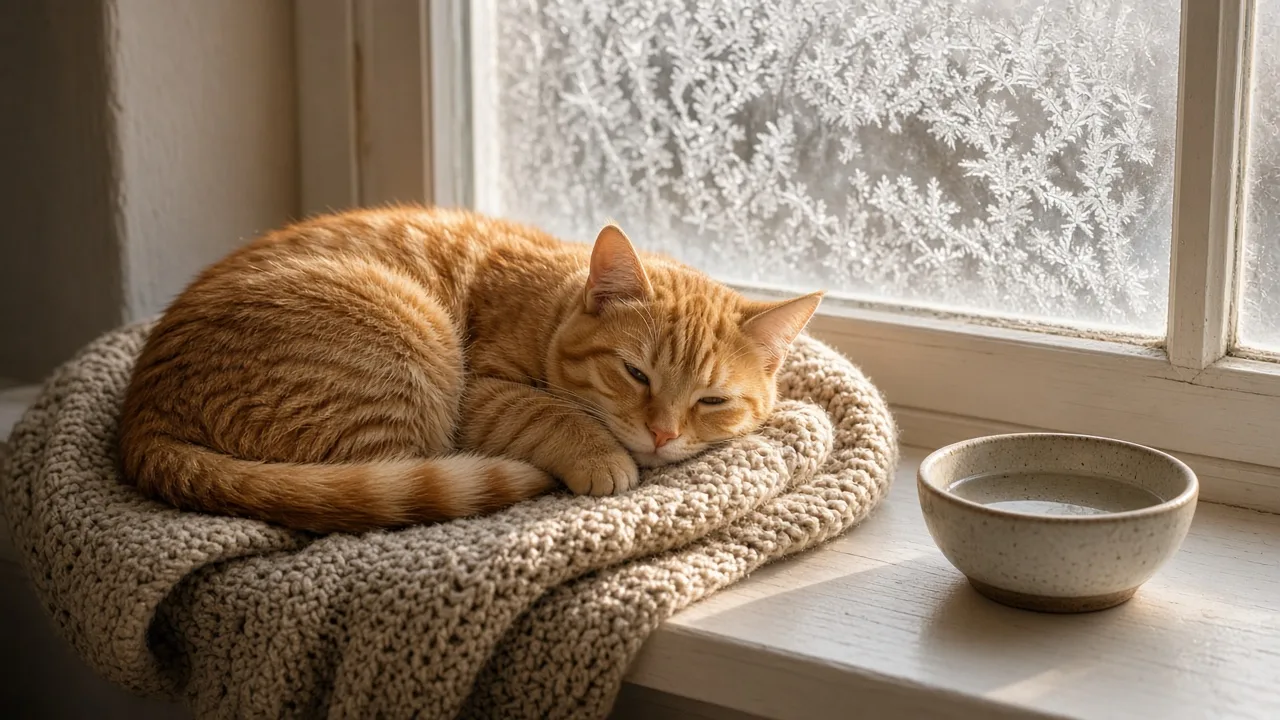
- Warm resting spots. If your cat has a favorite blanket, bed or sunny window, keep it available and away from drafts.
- Drafty rooms. Mention any windows or doors that run cold, or rooms that should stay closed.
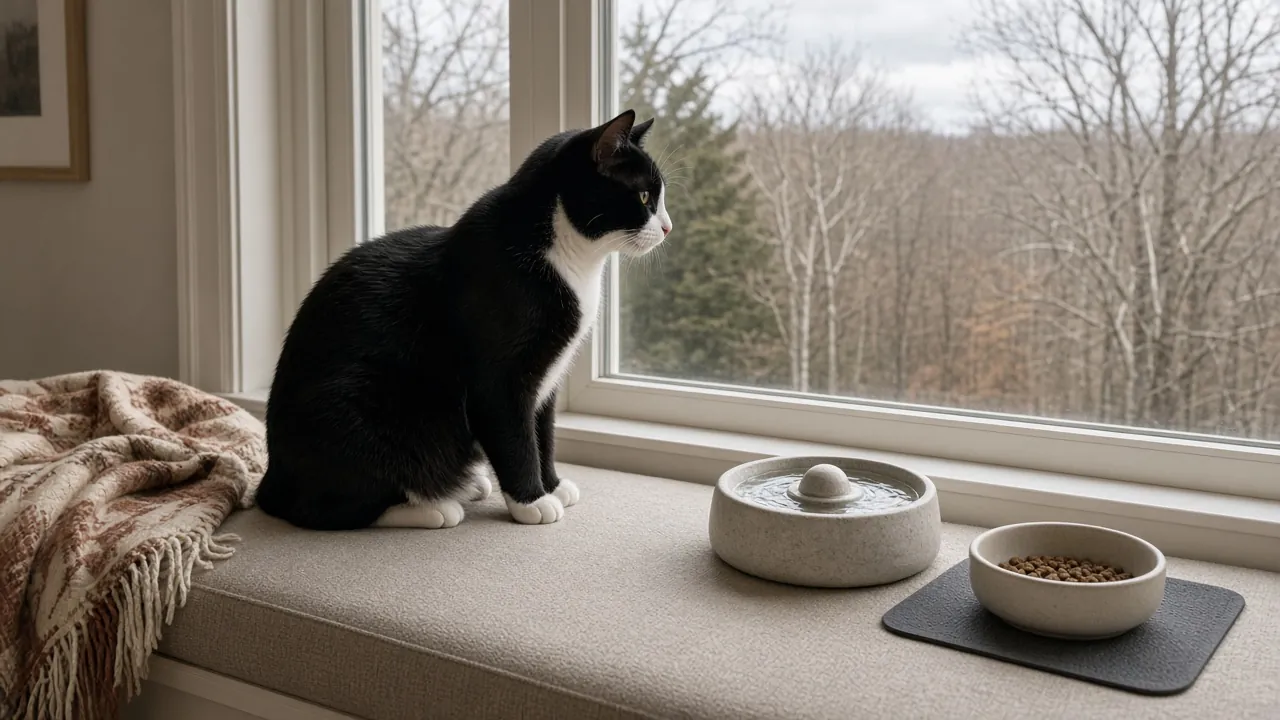
- Easy access. Make sure food, water and the litter box are reachable without stairs if your cat struggles with them.
For more on winter travel with cats in general, see Cat Sitting While You Travel This Winter.
What to tell your sitter before you leave
Written details help any caregiver follow your senior cat's routine closely. Include:
- Feeding amounts, times and how your cat prefers food served
- Every medication, with dose, timing and how your cat takes it best
- What normal looks like for your cat: usual appetite, litter box habits, favorite spots and typical behavior
- Anything your veterinarian has asked you to monitor
- Your veterinarian's contact information, your preferred emergency clinic and a reliable emergency contact
- Where supplies are kept, with enough food, litter and medication for the full trip plus a few extra days
The First-Time Pet Sitter Checklist covers home access, supplies and other preparation in more detail. If medication is a big part of your cat's day, Can Your Pet Sitter Handle Medications? lists questions worth asking before you book.
Talk with your veterinarian before a long trip
If your cat has a health condition or has recently had changes in appetite, weight or behavior, check in with your veterinarian before you travel. They can tell you what a caregiver should watch for, what would warrant a call, and whether your cat's needs are a good match for in-home visits while you are away. It also helps to let your veterinary office know someone else will be caring for your cat.
Planning care for your senior cat
Raven's K9 to 5 serves many communities around Louisville, Oldham County and Southern Indiana, from St. Matthews, the Highlands and Middletown to Anchorage, Crestwood, New Albany and Jeffersonville. Travel and availability depend on your location, dates and your cat's needs, so please reach out to confirm before making plans.
New clients can create a Time To Pet account to request care. If you would like to talk through your cat's routine first, contact Raven's K9 to 5 with your travel dates and a little about your cat. Availability is confirmed during booking.