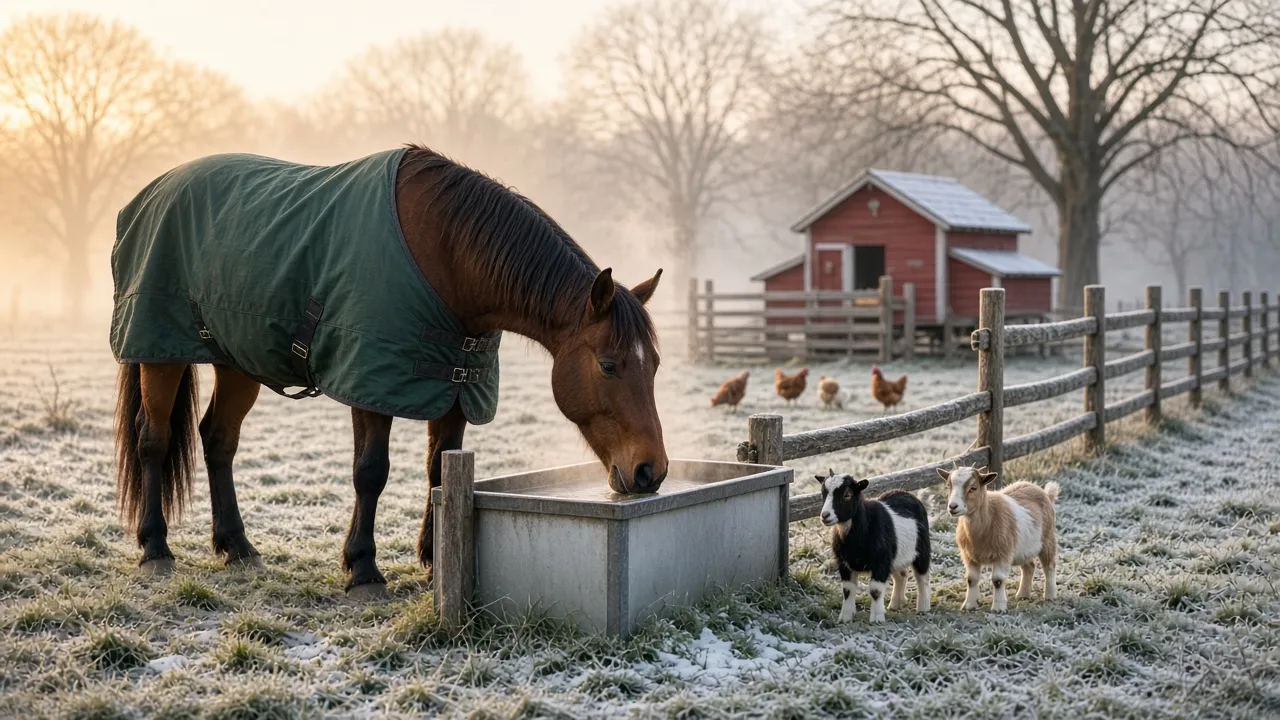
Traveling over the holidays looks different when you have a barn, a coop or a pasture to think about. A dog can stay with a sitter or a boarding host, but horses, goats, sheep, pigs and backyard chickens stay right where they are. Someone has to show up, in the cold and the dark, and keep their routine going exactly the way you would.
If you live on acreage in rural Oldham County, around Floyds Knobs or elsewhere in Southern Indiana, or you keep a few hens behind a house closer to town, this guide walks through how to plan winter farm and livestock care while you are away, what to have ready before you leave and how to choose between farm drop-ins and farm house sitting.
Why Winter Trips Need a Stronger Farm Plan
Farm routines are demanding in any season, but late fall and winter add a few extra challenges that a caregiver needs to be ready for:
Water access. Troughs, buckets and waterers can freeze overnight. Animals need reliable access to fresh, unfrozen water every day, so a caregiver should know how your heaters work, where the backup buckets are and what to do if something stops working.
Short daylight. Evening chores often happen after dark. Your caregiver should know where the barn lights, flashlights and breaker panels are, and which gates need to be checked at night.
Feed and hay. Many animals eat more forage in cold weather. Having enough hay, grain and supplements on hand before your trip, clearly labeled and portioned if possible, keeps feeding consistent.
Blanketing and shelter. If your horses are blanketed, your caregiver needs to know your rules for when blankets go on and come off. Turn-in and turnout decisions may also change with wind, ice or freezing rain.
Poultry in the cold. Chickens and other birds still need daily feed, water and egg collection, and coops need to be closed securely at dusk to protect the flock from predators.
None of these are complicated on their own. The challenge is making sure every one of them happens the same way, every day, while you are hundreds of miles away.
What Farm and Livestock Care Includes
My Farm and Livestock Care service is built around the feeding, water, turnout and property routines your animals already know. Depending on your setup, care can include:
Feeding grain, hay, supplements and special diets
Fresh water and trough or bucket cleaning
Stall, pen and paddock cleaning
Turn-in and turnout management
Egg collection
Fly control and blanketing
Daily health and wellness checks
Medication and supplement administration
Photo updates and detailed report cards
Additional specialty care, such as grooming, treatments or specialty feedings, may be arranged on request. The goal is simple: your animals should notice as little change as possible while you are gone, and you should know how they are doing each day.
Farm Drop-Ins or Farm House Sitting?
There are two main ways to cover a farm while you travel, and the right one depends on your animals, your property and how long you will be away.
Farm drop-in visits
Farm drop-ins work well when your animals are healthy, settled and on a predictable schedule. A visit covers the chores you need done, such as feeding, water, a health check and closing up the coop, and then the caregiver heads out. For a few horses, goats or a backyard flock, morning and evening visits may be enough.
Farm house sitting
Farm house sitting adds an overnight presence on your property. This can be a better fit when you have a larger or more complex operation, animals that need late evening and early morning checks, a property that should not sit empty for long stretches, or pets inside the house as well as animals outside. It is also worth considering during winter, when weather can change quickly overnight. You can read more about how overnight care works on the Overnight House Sitting page.
One detail to plan around: midday visits are separate from overnight care. If your animals need attention outside the overnight window, farm drop-in visits can be added during the day. If someone in your household, indoors or out, needs nearly constant supervision, 24-Hour Pet Care may be worth discussing.
Why Every Farm Client Starts With a Consultation
Every farm and livestock client begins with a required initial consultation. This is not a formality. Farms are all different, and the consultation is where I learn your routines, review each animal's needs, walk the property and build a customized care plan with you.
During the consultation, it helps to cover:
Each animal's routine. Feeding amounts and times, supplements, medications and any animals that need to be fed separately.
Handling notes. Who is easy to catch, who pushes at gates, who should never be turned out together and anything a new person should know.
Property layout. Gates, latches, hydrants, heaters, lights, feed storage, tools and where the hay is kept.
Winter specifics. How you handle frozen water, blanketing, icy paths and turnout in bad weather.
Emergency plan. Your large animal veterinarian, a backup contact nearby and your instructions if an animal is injured or ill.
Writing these down before your trip helps any caregiver, and it gives you a clear checklist to review before you leave. If you want help preparing your home and keys, the Home Access Guide explains how access works for in-home and on-property visits.
Before You Leave: A Winter Farm Checklist
Stock enough hay, grain, bedding and supplements for the full trip, plus a little extra in case of bad weather.
Label feed bins and write portions on a sheet posted in the barn.
Test water heaters and heated buckets, and set out a few spare buckets.
Check that barn lights, flashlights and outdoor lighting work.
Walk fence lines and gates, and fix anything that might fail in wind or snow.
Leave blanket instructions with temperature guidelines for each horse.
Post your veterinarian's number and your backup contact in the barn and the house.
Make sure gates, locks and outbuildings can be opened by your caregiver.
Fear Free, Insured and Trained Care
When you hand over your property and your animals, you want to know who is taking care of them. I am Fear Free Certified and Pet First Aid and CPR trained, and my business is insured. Fear Free handling means working calmly and patiently with each animal, which matters just as much in a barn aisle as it does in a living room. You can learn more about my approach on the About page.
Serving Rural Properties Around Louisville and Southern Indiana
I serve many communities across Louisville, Oldham County and Southern Indiana, including rural properties in areas like Crestwood, Pewee Valley and Floyds Knobs, as well as smaller backyard setups closer to town. Farm visits depend on distance, schedule and the size of the job, so please contact me to confirm availability and travel for your property before you plan around it.
Farm care takes a little more planning than a typical pet visit because it starts with a consultation. If you know you will be traveling for Thanksgiving, Christmas or New Year's, reaching out early gives us time to meet, walk the property and set up a plan. For more on timing, see how much notice a Louisville pet sitter needs before your trip.
Ready to Plan Your Farm Care?
New clients start by creating a Time To Pet account, where you can share your animals' details, care instructions and dates. Register with Raven's K9 to 5 on Time To Pet to get started, then we can schedule your initial farm consultation. Final pricing, availability and applicable policies are confirmed during booking, and you can review them anytime on the Policies page.